
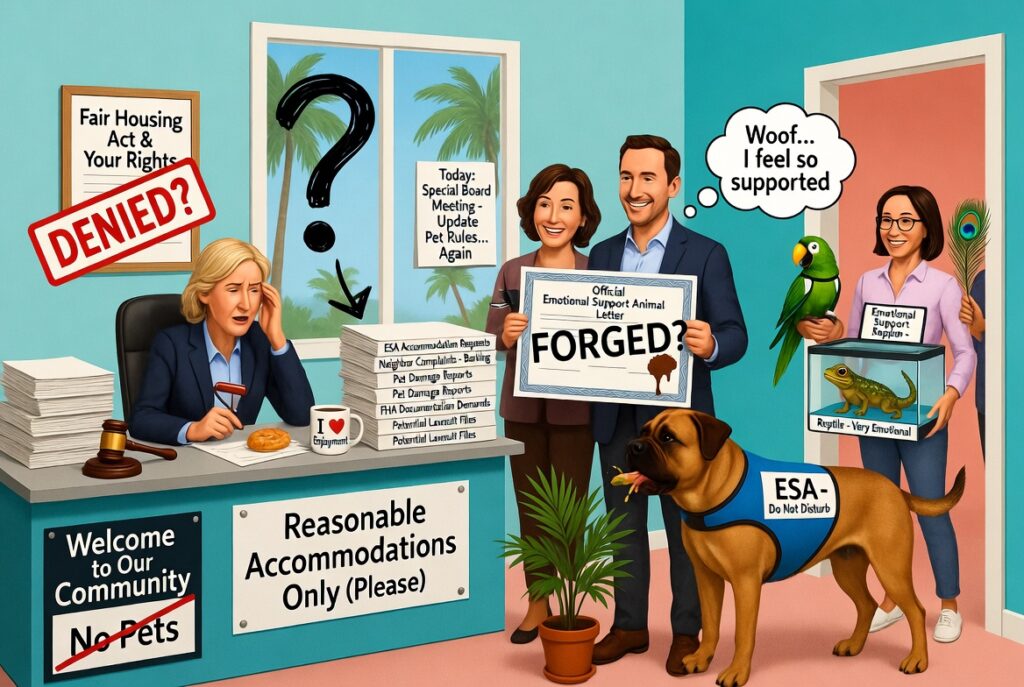
Florida condominium and homeowners associations regularly deal with requests for emotional support animals, especially in communities with pet restrictions, breed limits, weight limits, or no-pet policies. These requests can be difficult to evaluate and, if handled incorrectly, may expose associations to fair housing complaints or litigation.
On May 22, 2026, the U.S. Department of Housing and Urban Development (HUD), through its Office of Fair Housing and Equal Opportunity, issued new enforcement guidance that changes how HUD intends to evaluate certain animal-related reasonable accommodation complaints under the Fair Housing Act.
What Changed?
HUD has rescinded its prior guidance on assistance animals, including the 2020 framework that many housing providers previously relied on.
Under HUD’s new enforcement approach, the focus is now on whether the animal is individually trained to perform specific work or tasks directly related to the resident’s disability. HUD also made clear that emotional support, comfort, companionship, or general well-being, by themselves, do not qualify as trained work or tasks.
This is a significant shift. In practical terms, HUD may now be less likely to pursue enforcement actions involving untrained emotional support animals, particularly where the request is unsupported, vague, or based on generic online documentation.
Why This Matters for Florida Community Associations.
Condominium and HOA boards must balance fair housing obligations with the association’s governing documents, pet rules, insurance concerns, nuisance issues, and the rights of other residents.
HUD’s new guidance gives associations stronger support to carefully evaluate whether:
- The animal is trained to perform disability-related tasks;
- The requested accommodation is necessary;
- The documentation is reliable; and
- The request is supported by more than a generic online certificate or form letter.
This may be helpful for associations facing questionable ESA requests, multiple-animal requests, or requests that appear to be an attempt to avoid otherwise valid pet restrictions.
Associations Still Need to Be Careful.
The new HUD guidance is important, but it does not mean associations can automatically deny emotional support animal requests.
The guidance does not change the Fair Housing Act itself. Residents may still file private lawsuits in state or federal court. State and local fair housing laws may also provide additional protections. Courts will continue to review these disputes based on the specific facts of each case. For that reason, associations should avoid blanket policies or automatic denials.
Practical Steps for Boards and Managers.
Florida associations should consider the following:
- Review pet and animal policies to distinguish between pets, trained service or assistance animals, and emotional support animals.
- Update reasonable accommodation procedures so requests are handled consistently and in writing.
- Document the interactive process, including the request, supporting documents, follow-up questions, board review, and final decision.
- Avoid automatic denials, even when the animal is not clearly trained.
- Consult counsel before imposing pet fees, deposits, breed limits, weight limits, or other restrictions on an animal claimed as an accommodation.
- Monitor future developments, as HUD has indicated that additional rulemaking may follow.
Bottom Line.
HUD’s new enforcement guidance may provide welcome relief for Florida condominium and homeowners associations dealing with questionable emotional support animal requests. However, this area of law remains fact-specific and legally sensitive.
Associations should use this opportunity to review their pet policies, reasonable accommodation procedures, and board practices. Clear rules, consistent procedures, and careful documentation remain the best way to reduce risk.
Our firm assists Florida condominium and homeowners associations with pet policies, emotional support animal requests, reasonable accommodation procedures, board training, and fair housing compliance. If your association is dealing with an ESA request or wants to update its policies in light of HUD’s new guidance, contact us to discuss practical options for your community.