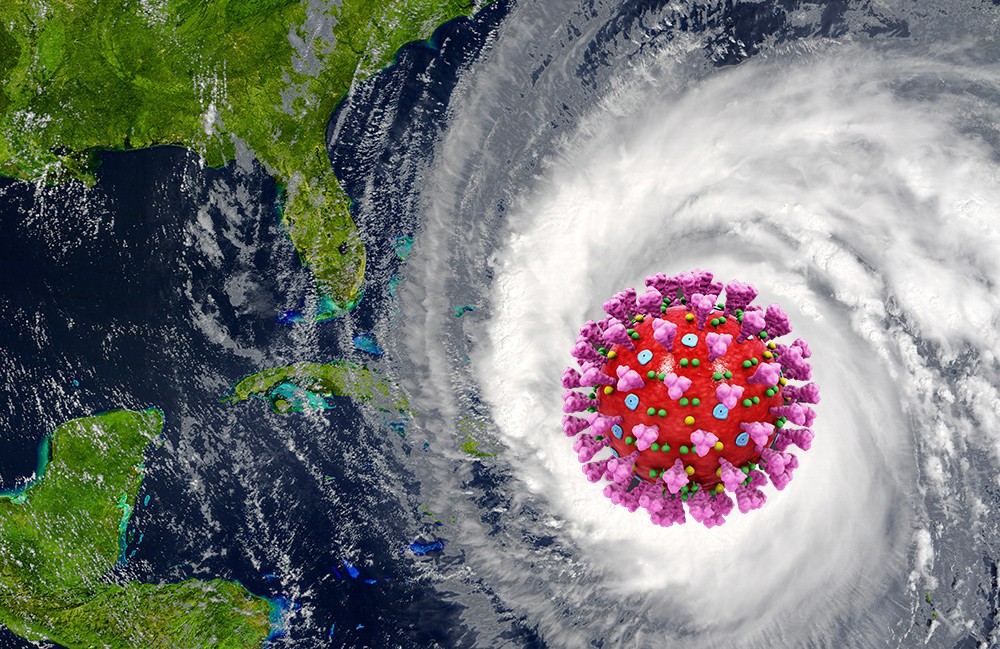
No Shirts, No Shoes, No Shots- No Service?

By Joshua Gerstin, Esq.
Click here for .pdf version

As the COVID-19 vaccine rollout begins to spread across the country two opposing sides are emerging, individuals refusing to get vaccinated and others hoping to refuse them service. Board members across Florida are wondering whether their community association can and should require anybody residing in and/or entering their community to be vaccinated. In short, the answer is not clear. Dealing with a novel virus-induced pandemic brings novel legal challenges without clear answers.  

According to the Appellate Court in the case of Hidden Harbour Estates, Inc. v. Norman:

“It appears to us that inherent in the condominium concept is the principle that to promote the health, happiness, and peace of mind of the majority of the unit owners since they are living in such close proximity and using facilities in common, each unit owner must give up a certain degree of freedom of choice which he might otherwise enjoy in separate, privately owned property. Condominium unit owners comprise a little democratic sub-society of necessity more restrictive as it pertains to use of condominium property than may be existent outside the condominium organization.  .  .”

Hidden Harbour Estates, Inc. v. Norman, 309 So.2d 180 (Fla. 4th DCA 1975).

The Hidden Harbour Court went on to hold the test to determine a rule’s validity is “reasonableness”. Only if a board of directors has the power to adopt a rule, the rule is reasonable, and the rule does not conflict with some other right contained in a superior governing document, can the association adopt it. In this instance, rules requiring members to be vaccinated may conflict with the easements granted to owners to enjoy the common areas (a superior governing document). In addition to possibly conflicting with a member’s easement to enjoy the common areas, vaccines are not yet available to everyone and members will present religious and medical accommodations. As anyone dealing with emotional support animals in a no animal environment will readily explain, there are many easy-to-find medical providers ready, willing, and able (for a fee) to attest to an ailment or affliction to assist a member avoid a rule. Despite their often-dubious attestations, requiring a vaccine and refusing an accommodation based on a medical or religious exemption is difficult and expensive for community associations to fight. Adding the proverbial fuel to the fire is Florida’s lack of a Covid-19 vaccine mandate and pending legislation to strip the Florida Department of Health’s authority to implement a COVID-19 vaccine mandate  (HB 6003).

Another problematic issue is increased association liability. In addition to the ever-increasing “HIPPA type” liability that comes from storing health records, community associations will be placing themselves as the weak (and liable) link in a chain if an unvaccinated member sneaks in. Further stoking potential community liability is the science (many people seem to ignore), vaccinated people can catch and transmit COVID-19.  Community associations promoting the safety of mingling in their clubhouse or similar area with only vaccinated people may find themselves in a lawsuit from a person infected in an area promoted as safe.

What can a community association do?

Although requiring members to be vaccinated may not be the best approach, requiring individuals other than members to be vaccinated may be a position worth exploring.  Depending on a community association’s governing documents, passing rules requiring all vendors for the common areas and elements to be vaccinated is a good first step.  Association’s that rent clubhouse rooms or common elements (tennis, bocce, pickleball, etc.) to groups in which outsiders are allowed to participate may also want to consider a vaccine requirement for the outsiders. However, for the reasons expressed above related to members, it is doubtful a community association can prohibit an unvaccinated guest of a member who is not part of a member-group renting an area from using the area with a member.

Until the emergency declaration by Governor DeSantis expires, Florida’s community associations will have extended leeway to propose rules limiting the spread of COVID-19.  However, an emergency declaration is not going to overcome the multiple religious and medical accommodations that will be presented in response to a vaccine mandate. Combined with potential liability in storing medical records and the implied notion a common area with only vaccinated people will be 100% safe, community associations looking to require vaccinations should look outward towards their groups that rent common areas and vendors. Combined with this outwardly focus should be a relentless effort on behalf of every community association to educate and promote to its members through easy-to-understand and readily available information the use of the COVID-19 vaccine.

    Stay Informed!

Click Here to Subscribe to the Gerstin & Associates Newsletter

Protect Your Home’s Title (your biggest investment), for Free!

Due to the increase of information available online, criminals have been fraudulently recording deeds and stealing or refinancing people’s homes without their knowledge. Recently, the Palm Beach and Broward County Clerks have each established programs to alert residents when a deed to their property has been transferred, for free!.

No free or paid service, despite promises to the contrary, can stop a County Clerk from recording a deed, even a fraudulent one. These services do not prevent the fraud from happening. Instead, the rightful owners are alerted within 24 hours by email if there is a problem that needs to be addressed before it is too late.

Residents in Palm Beach and Broward can sign up for this free fraud prevention program as follows:

For Palm Beach County Residents:

www.mypalmbeachclerk.com/records/property-fraud-alert or call 800-728-3858.

For Broward County Residents:

https://bcpa.net/

ALERT! How to have vaccinations at your Palm Beach County Community Association.

Palm Beach County community associations interested in having their community as a Point of Distribution (“POD”) for the CVOID-19 vaccine should send a letter of request to (see email and telephone contact information at the end of this post):

Mr. Philip Dulmage
Office of Public Health Preparedness
Florida Health – Palm Beach County
800 Clematis Street
West Palm Beach, FL  33401

The letter should include the following:

                * A demographic description of the community

                * The number of residents in the community, and the number of
residents aged 65+

                * A specific request for a mobile unit to service the community

Once received, your community will be placed in the queue for vaccine distribution, as vaccine becomes available.  The source of this information is Rep. Emily Slosberg, the PBC Legislative Delegation and the Alliance for Delray Residential Associations.

The following contact information was located online:

Philip J. Dulmage Jr.
Cities Readiness Initiative Coordinator
SE FL Reg. 7 AHIMT – RESL
Division of Performance Improvement & Preparedness
Florida Department of Health
Palm Beach County
800 Clematis Street
West Palm Beach, Fl 33401
(561) 671-4016 office
Email: Philip.Dulmage@flhealth.gov

The Top 10 Most Pressing Issues for Community Associations In the New Year.

Click here for .pdf version.

As The State of Florida emerges from the COVID-19 pandemic, the year 2020 will live on in infamy. During the past year of sadness, chaos, and hope many trends emerged that are likely to stay with us long after COVID-19 is gone.  Some of these trends, such as increased communication and video conferencing, will be welcome. Other trends, such as the need for increased collection efforts and renewed leasing and sales restrictions, may not be as welcome.  Following are the top ten most pressing issues for community associations in the new year.

1.            ZOOM Meetings for Members. For most community associations, offering a video conferencing option for the members to participate in a Board meeting or count towards a quorum in member meetings after the emergency declarations are lifted will require the promulgation of well-drafted Rules. For some community associations, the more arduous process of amending the declaration or by-laws may be required.  

2.            ZOOM Meetings for Directors. In addition to members participating in board meetings via video conferencing, directors may want to participate via videoconferencing as well.  Allowing directors to participate via video conference after the emergency declarations are lifted will require a thorough review of a community association’s governing documents.  A quorum of the board attending board meetings via video conferencing after the emergency declaration subsides will most likely not survive a challenge.

3.            Recording ZOOM Meetings. If a ZOOM meeting is recorded, the recording is an Official Record likely requiring the Association to make the recording available to others to watch for the next seven years.  Deciding not to record video conference meetings inevitably causes the loss of evidence necessary to confirm a quorum if challenged. Consider establishing a video conference recording policy.

4. Mandating Vaccines for Common Area Access.  Can a community association mandate proof of COVID-19 vaccination before allowing members or their guests access to common areas?

5. Working from Home or Running a Home-Based in Community Associations. The pandemic normalized working from home and in many instances newly laid-off workers are starting home-based businesses. Working from home is different from having a home-based business with pickup, deliveries, and the occasional customer.  However, most governing documents do not recognize the difference between the two, rendering most existing work at home/ home-based business restrictions useless.

6. The Mass Yankee Migration, Leasing & Sales Restrictions.  The pandemic amplified an already existing trend, more people are moving to Florida than ever before.   Many community associations recently made an unsettling discovery, their leasing and sales restrictions enforced for years are either outdated or do not exist at all!  Fair Housing Act complaints are brutally expensive and may not be covered by your community’s insurance. Check and validate your leasing and sales restrictions before it is too late.

7. Getting Involved in Neighbor v. Neighbor Disputes.   As the pandemic raged, so did people’s tempers. Community associations that misunderstood their role and scope of authority are now finding themselves spending time and money handling neighbor v. neighbor disputes. To avoid unnecessary liability and the wasting of precious resources, community associations need to know “when to hold and when to fold em’”.

8.     Increased Collection, Bankruptcies, and Foreclosures.  The financial strain of the pandemic will be felt throughout community associations long after the pandemic is over. Many community associations have out-of-date collection policies. Other community associations improperly “follow their gut” or make up rules as they go.  Community associations need to examine their collection policies now. Lawsuits over improper collection activity are expensive and damaging. Community associations can be compassionate, while at the same time avoid costly deficits.

9.      Governing Document Enforcement.  Many community associations were lax in enforcing their governing documents as the pandemic raged.  Finding a kindly, gentler way to now enforce your governing documents before it is too late and your community’s restrictions are “waived” and lost forever is vital for many community associations.

10.    Pets, Pets & More PetsDuring the pandemic pet adoptions skyrocketed. Many community associations found themselves without the ability to limit pets and have no system in place to track pets.  Other community associations improperly allow or deny emotional support animals leading to increased liability.  

One thing is known for certain, community associations that act proactively will be better positioned to meet their obligations in the year 2021.  Form a committee, gather the Board, and call your association’s attorney, the time is now to plan ahead.   

 Stay Informed!

Click Here to Subscribe to the Gerstin & Associates Newsletter

Free Board of Directors Evening Certification Course Date Announced!

The Alliance of Delray Residential Associations and Gerstin & Associates are pleased to announce a virtual board of directors certification course for both condominiums and HOAs will be held:

Date: January 14, 2021.

Time: 6 PM to 8 PM.

All attendees will be emailed a Certificate of Completion illustrating Florida’s certification requirement for new directors has been met.

To register, please email vinikoor@bellsouth.net or message Delray Alliance Exec. VP Lori Vinikoor at 561-715-1530.

Although the course is free, registration is required and is limited so please register now.

Barbarians at the Pool Gates!

Safely Reopening Common Areas

By: Joshua Gerstin, Esq.

Three overriding concerns should be the focus of Florida’s community associations as they face ever-increasing demands from members to reopen their common areas: 1) health, 2) safety, and 3) liability. Operating at warp speed should not be a community association’s re-opening objective. Florida’s community associations should strive for a slow but steady, staggered, and thoughtful re-opening of common areas.

Safety First.

The first step in reopening common elements is for a community association to check with their local governing authorities to determine whether there are any restrictions on opening common areas in their city or county. Although Governor DeSantis entered Florida into Phase 3 of the pandemic, the Governor’s most recent order primarily applies only to businesses.  The Governor’s Phase 3 order did not overrule the authority of a county or city from imposing or maintaining its pandemic ordinances pertaining to community associations.  If a community association is planning to reopen a common area, it should pass a board resolution and/or emergency rules with procedures mimicking the requirements of Governor DeSantis’s Executive Orders, local orders in your jurisdiction, and health guidelines from the Center for Disease Control (“CDC”).

Mitigating Liability, Second.

The pandemic is endemic and most community association insurance policies do not cover COVID-19/infectious disease transmission. Community associations must strike a balance between reopening common areas and mitigating the liability risk. As part of a community association’s emergency rules authority, requiring members and guests to sign an attorney-drafted release and hold harmless agreement as a pre-condition for using the common areas is a good idea. However, releases and hold harmless agreements will not entirely insulate community associations from being sued and/or exposed to liability. The best way to avoid liability is to not maintain conditions at your community association that contribute to spreading the virus. Therefore, regardless of requiring releases and hold harmless agreements, community associations must strictly adhere to state and local ordinances, as well CDC guidelines.  

Sources of Information.

Most community associations will find the following resources helpful as they reopen their community association’s common areas Although the information provided is valuable, please check with your association’s attorney before taking any action.

Community Association’s Institute “guidelines for reopening common areas, amenities, and operations. Modify and adapt a letter, sign, and operational advice to your community” is available at:  https://www.caionline.org/pages/coronavirus.aspx

Community Association’s Institute  “Healthy Communities guide, a summary of practical advice and best practices from the Centers for Disease Control and Prevention (CDC) relevant to COVID-19 and community associations.” is available at: https://www.caionline.org/pages/coronavirus.aspx

All state and county emergency and executive orders can be found at:  https://covid19.lobbytools.com/regions

Center for Disease Control COVID-19 can be found at: https://www.cdc.gov/coronavirus/2019-ncov/index.html


Stay Informed! 

Click Here to Subscribe to the Gerstin & Associates Newsletter

Are the million-dollar PPP loans many PBC golf communities collected justified?

In the News:

https://www.palmbeachpost.com/news/20200709/are-million-dollar-ppp-loans-some-palm-beach-county-golf-communities-collected-justified

Six golf country clubs in Palm Beach County – Hunters Run, Quail Ridge, Wycliffe, Old Palm, Banyan Cay and the Loxahatchee Club – may have received as much as $18 million in PPP loans through the Small Business Administration.

Six golf course communities are among the more than 3,000 businesses in Palm Beach County that received Payroll Protection Program (PPP) loans through the Small Business Administration (SBA).

An analysis of the loans released this week by the SBA shows that the six clubs may have received as much as $18 million. The SBA had been sued by a number of newspaper organizations over the identity of the loan recipients. When the applicants applied, they were told the loans would be public record.

The program was designed to keep employees on the payroll. If employers do that and comply with the loan conditions, the loans become grants and do not have to be repaid.

The SBA agreed to identify all recipients of loans in excess of $150,000 but only provided ranges of funds received, refusing to reveal the exact amount.

The data released by the SBA do not include the amount of the loan but rather the loan amount a bank has approved. The actual amount of a loan could be smaller than the approved amount. All amounts are in ranges.

Some golf course communities that accepted PPP loans in Palm Beach County have recently spent upward of $10 million on massive improvements to their clubhouses and golf courses.

The clubs that took the money include:

– Hunters Run ($2 million to $5 million) in Boynton Beach.

– Quail Ridge ($1 million to $2 million) in Boynton Beach.

– Wycliffe ($2 million to $2.5 million) in Wellington.

– Old Palm ($1 million to $2 million) in Palm Beach Gardens.

– Banyan Cay Resort Club ($700,000 to $2 million) in West Palm Beach.

– The Loxahatchee Club Homeowners Association ($150,000 to $300,000) in Jupiter.

Scores of other Palm Beach country clubs had applied for the PPP loans. Many were approved but decided to refuse to accept the money on both moral grounds and legal grounds after reading the fine print. Government auditors are expected to review how the money was spent and can ask for the money to be returned and penalties to be imposed if they find misrepresentations.

Fifty-seven country clubs in Florida accepted the PPP funds. According to CNBC, more than 400 country clubs and golf courses received loans throughout the country. The issue of whether it is appropriate for golf course communities to receive PPP loans has been debated.

Assessment revenue a factor

Joshua Gerstin, a Boca Raton lawyer who specializes in homeowner and condominium association law, said he expects one factor the SBA will consider is how much revenue a country club gets from its assessments.

“If it is mostly assessment driven, the country club might have a problem,” he said. “If members continued to pay their assessments, there was no real loss of revenue. But if much of it comes from dining and other sources that members pay outside of their assessments, they could be eligible.”

According to the SBA, businesses must certify that the loan is needed “to support ongoing” operations and that they are unable to access “other sources of liquidity” to support their ongoing operations.

Addison Reserve General Manager Michael McCarthy said once he and his board saw those revised requirements, they decided that it would be wrong to participate in the PPP program.

“There was no way I could certify that we needed it stay in business or that we didn’t have other sources of liquidity,” he noted.

Wycliffe, Quail Ridge: We preserved jobs

Hunters Run President Michael Soroka declined to comment on the issue. According to the SBA, Hunters Run and Banyan failed to provide data to indicate how many jobs were saved by the loans. Wycliffe was chastised on CNBC early Tuesday morning for accepting its loan. The Post has learned that the Wycliffe loan amount was $2 million. It was able to preserve 281 jobs. Wycliffe’s general manager, Rob Martin, released a statement to The Post that read:

“At Wycliffe, we are thankful to all of our employees for their hard work and dedication through these challenging times. We took PPP money because we care deeply about our team and wanted to make sure that we had the ability to provide them a regular paycheck. Following the legal parameters, we only requested and received enough to cover our payroll needs and did not use our loan in any way to disadvantage other companies. We are thankful that we qualified to receive money so that our employees and their families could make ends meet during these challenging times.”

Quail Ridge GM William Langley said the PPP loan was used as intended. He noted that Quail Ridge would have had to have laid off many of its 300 employees without the loan. “We are not a club with deep pockets,” he said.

The Club at Admiral’s Cove in Jupiter was one of those that returned the funds – $3.1 million. “We saw too many issues, both moral and legal,” said CEO Bret Morris. “We did not want to take the risks.” He said Admiral Cove was able to keep its 500 employees working, noting: “We found other things for them to do.”

Finally! Florida Passes Emotional Support Animal Law.

Finally, the Florida legislature passedSB1084 a bill regulating the out of control problem of Emotional Support Animals in Florida’s community associations.  SB 1084 was signed into law by Governor DeSantis on July 1, 2020, and takes effect immediately.  The new law provides for the following (a copy of SB 1084 can be found here)(a copy of this page in .pdf can be found here)

1.  Amends Florida’s Fair Housing Act by prohibiting a housing provider, to the extent required by federal law, rule, or regulation, to deny housing to a person with a disability or a disability-related need who has an animal that is required as support. It defines emotional support
animal as an animal that is not required to be trained to assist a person with a disability but, by virtue of its presence, provides support to alleviate one or more identified symptoms or effects of a person’s disability.

2.  The bill prohibits a housing provider from charging a person with an emotional support animal additional fees. It does allow a housing provider to prohibit the animal if it poses a direct threat to the safety, health, or property of others and to request written documentation that reasonably supports that the person has a disability. The supporting information may be provided by any federal, state, or local government agency, specified health care practitioners, telehealth providers, or out-of-state practitioners who have provided in-person care or services to the tenant on at least one occasion. If a person requests to keep more than one emotional support animal, the housing provider may request information regarding the specific need for each animal and may require proof of licensing and vaccination requirements for each animal.

3.  The bill prohibits a housing provider to request information that discloses the diagnosis or severity of a person’s disability or any medical records relating to the disability. The housing provider is authorized to develop a routine process for reasonable accommodation requests relating to emotional support animals, but prohibits the denial of a request based only on a tenant’s failure to use a specific form or process.

4.  The bill creates a new cause for disciplinary action against a health care practitioner’s license for providing supporting information for an emotional support animal, without personal knowledge of the patient’s disability or disability-related need. It also creates the misdemeanor crime of providing false or fraudulent emotional support animal information or documentation, and requires a convicted person to perform 30 hours of community service for an organization serving persons with disabilities, or another entity or organization the court determines
appropriate.

 Stay Informed!

Click Here to Subscribe to the Gerstin & Associates Newsletter


2020 Hurricane Season, the Definitive Checklist for Florida’s Community Associations.

– By Joshua Gerstin, Esq.

(Click here for .pdf version with “checkable” fields for your ease of use!)


 Hurricane season begins on June 1st and lasts 5 months, with storms typically peaking in August and September. Due to COVID-19, this hurricane season will be unlike all others.  Properly preparing for this unique hurricane season could truly be a lifesaver. The following hurricane preparation checklist is a combination of over twenty years of community association legal experience and new COVID-19 precautions:

 Things to do now:

COVID-19 Related Hurricane Checklist:

—      Start stocking up on cleaning supplies now. Most stores have limited cleaning supplies or only allow a limited number of purchases.  It is going to take a lot longer to obtain all the cleaning supplies you will need.

—    An abundance of hand Sanitizer, soap, disinfectant spray, disinfectant wipes and face masks are the COVID-19 supplies your community association will need if a hurricane strikes.

—   Plan for extended power outages (generator fuel, ice, flashlights, extra petty cash and installing a landline).  Although FPL has been burying power lines and improving the electrical grid, additional workers will be needed to restore power after a hurricane.  COVID-19 testing of these workers will cause delays and will limit the size of this additional workforce as infected workers are turned away.

—  Purchase locks and non-electronic security equipment to keep buildings and common areas secure from vandalism or looting during an extended power outage.

—  Go to the app store for your mobile phone and download the official FEMA app.  A face-to-face meeting with an adjuster after a hurricane strikes is unlikely. FEMA has made available a phone app that can allow insurance companies to provide estimates without an in-person visit. When the app is running, it can take photos and measurements and gather additional information as you walk through your common areas.

—  Confirm shelter locations, evacuation routes and remind residents to take their pets if they evacuate.  Due to COVID-19 shelters and evacuation routes across Florida have changed. Officials are considering protocols for shelters that range from separating people based on temperature checks to non-congregated sheltering in hotels. Direct residents to https://www.cdc.gov/disasters/hurricanes/covid-19/public-disaster-shelter-during-covid.html for further information about staying virus free in a shelter.

—  Establish a designated area that allows for social distancing where residents can meet for more information after the disaster.

—  Inform residents in writing the extent of help the association will be providing (and not providing) during and after a hurricane. Urge your residents to begin their own preparation and evacuation plans.

—  Update your contact list of owners, board members and staff.  Ensure the list contains the correct contact information for seasonal residents.  Print out the list and place it in a safe location (having it on your computer will do you no good when the power is out).

—  Similar to the children’s game “telephone”, establish amongst the board of directors a chain of command for communications in the event a hurricane strikes. When a hurricane strikes, time should not be wasted by having to contact each board member or answer each board member’s non-emergency information inquiry.

—  Update your vendor list, print it out and place it in a safe location (having it on your computer will do you no good when the power is out).

—  Ensure your building’s plans and blueprints are in a safe location with easy access for first responders or insurance agents. Highlight shut-off valves, power-boxes, lift stations and debris staging areas.

—   Service your association’s lift stations now to avoid sewage overflow if a hurricane strikes.

—   Confirm all of your association’s data is being regularly backed up to the cloud or offsite.

—   Copies of your association’s insurance policies, claims filing information and insurance agent’s contact information should be in paper form and secured in a safe location.

—   Keep handy a list of all bank account numbers, branch locations and authorized association signatories.  Have the board authorize an increased petty cash amount to be stowed away with your hurricane supplies. Credit cards, debit cards and computer checks will not be available if the power is out.

—  Enter into contracts with vendors you will use during an emergency (water removal, debris cleanup repairs, etc.) to ensure they are available immediately after an “all clear” is given. Hurricane Irma struck during the same season a hurricane hit Puerto Rico and Texas.  Many community associations were unable to secure vendors for the cleanup of debris and water because their vendor was assisting with other hurricanes.

—  Pre-determine a staging area for debris and contract for debris dumpsters.

—  Print out the instructions for updating the Association’s website and keep them in a safe location. Designated a member or director to provide frequent website updates regarding your association after a hurricane strikes.  Off-site or seasonal residents will be searching for information and you do not want them contacting management if possible.

—  Print out the instructions for updating the Association’s voicemail and keep them in a safe location. Residents and their loved ones will be calling for information and your association’s outgoing message on its voicemail is an effortless way to keep them updated.

—  Make plans to shut down and secure clubhouses and other amenities, store furniture and to shutoff electric and water.

—  Confirm all drainage areas and lines are working at full capacity.

—  With proper socially distancing, establish a designated area within the association for posting hurricane-related updates.

—  If you have a manned gate, make sure the attendants and the residents know at what point the attendants will be sent home and that the gates will be locked in the open position to provide emergency ingress and egress.

—  Buy battery operated walkie-talkies and consider having a landline installed. Past hurricanes have taught us battery-operated walkie-talkies and a landline are the only communication methods that can be relied on if the power goes out.

—  Stock up on and securely store gasoline, tarps, duct tape, sandbags, submersible water pumps, chain saws, water, flashlights, weather radio, batteries, and a video camera for documenting storm damage.

—   Consult your elevator company on how to properly secure your association’s elevators.

—   Ensure you have keys to each unit in your building.

—  Have your Association’s trees trimmed, including the removal of all coconuts, seeds or potential hurricane “missiles”.

—  Have all dead and dying trees removed. Consider waiting to replant any new trees until after the hurricane season. All new trees should be firmly staked and secured

—  Identify residents who need special care and contact those owners and their families to determine if arrangements have been made for them.  Remind all residents the elevators may need to be shut down or may not operate for an extended period due to a power outage.

—  Inform residents in writing what to expect from the association before, during and after a hurricane strikes.  Advise residents to communicate with friends and relatives elsewhere who will be concerned. Association offices oftentimes become overwhelmed after a storm with relatives calling from out of state to check on them.  In the event of a mandatory evacuation, remind owners to keep all receipts related to additional living expenses, such as hotel accommodations and gasoline if an evacuation is mandated.  These receipts may be reimbursable as part of an eventual insurance claim.

When a hurricane warning has been issued:

—  Bring all objects inside that may be tossed about by wind or rain.

—  Check all drainage areas and remove any debris that would restrict water flow.

—  Lower the water in all pools, fountains and other water features.

—  Shut down, close and securely lock all pools, water pumps (pools, fountains irrigation, etc.)  and recreation areas.

—  Videotape or photograph the building and all common areas with a date stamp to accurately document the property’s pre-storm condition for insurance purposes.

—  Ensure all construction dumpsters are empty.  If possible, arrange to have your regular dumpster emptied.

—  Strategically place sandbags in areas where flooding is anticipated.

After the hurricane has passed:

—   Stay calm, triage the association and focus only on life/safety issues.

—   After the life safety issues are stabilized, focus on damage mitigation and recording the remediation work with photographs and video.  Contact your vendors to come into the association to begin removing debris and items that are wet (drywall).

—  Consider shadowing contractors and vendors as they inspect or work on individual units to avoid stolen property claims later.

—  Continue documenting and recording the damage and remediation efforts for insurance purposes.

—  In times of need, unscrupulous people always try to take advantage. Avoid vendors, contractors and third-party/private insurance adjusters soliciting your association’s business.  If you have no choice, take the time to fully vet each one before signing anything.

—  With the assistance of an attorney experienced in community association hurricane claims (joshua@gerstin.com), contact and file a claim with your association’s insurance carrier.


Click here for .pdf version with “checkable” fields for your ease of use!

 Stay Informed!

Click Here to Subscribe to the Gerstin & Associates Newsletter

COVID-19 and the Reopening of Community Association Pools in Palm Beach County.

In the news, Joshua Gerstin, Esq. discusses larger community associations finding it easier to open their pools amid Palm Beach County’s COVID-19 restrictions.


Click here for the full article and video

Stay Informed!
Click Here to Subscribe to the Gerstin & Associates Newsletter